





How protected are fourth-generation sweeteners, such because the uncommon sugar allulose?
First, there was sugar and high-fructose corn syrup, the unique industrial sweeteners. They have been low cost, however that they had numerous empty energy and contributed to illnesses equivalent to weight problems, sort 2 diabetes, cavities, and metabolic syndrome. Then got here the second-generation sweeteners, the substitute sweeteners within the coloured pastel packets: NutraSweet, Splenda, and Candy’N Low. They’ve virtually zero energy, however there have been stories of hostile results, prompting warning. For instance, synthetic sweeteners have been discovered to induce glucose intolerance by altering the intestine microbiome, thereby producing “the counterintuitive impact of inducing metabolic derangements.” (In addition they style type of humorous.) Enter the third-generation sweeteners: sugar alcohols, equivalent to sorbitol, xylitol, and erythritol. They’re low-calorie sweeteners; nevertheless, their laxative results can create difficulties. That brings us to uncommon sugars like allulose, that are pure sweeteners with a sugar-like style and low or zero energy.
For many who haven’t heard of allulose, it’s been by means of a little bit of a rebranding—type of just like the morphing of rapeseed oil into canola oil, which compelled a Canadian group to replace its city slogan, as you possibly can see beneath and at 1:29 in my video Does the Sweetener Allulose Have Facet Results?.
Allulose was known as psicose, derived from the antibiotic from which it was remoted, a wierd origin story for a sweetener. Within the journal Frontiers in Bioengineering and Biotechnology, emphasis is positioned on the truth that allulose is “an actual and pure sugar relatively than a man-made sweetener,” however, satirically, for those who have a look at the reference it cites, it talks about how allulose is made by way of “functionalized polyhydroxyalkanoate (PHA) nano-beads adorned with D-tagatose 3-epimerase (DTE)” and “produced in recombinant endotoxin-free” branded micro organism.
Now, technically, allulose is a pure sugar—a so-called uncommon sugar, which the Worldwide Society of Uncommon Sugars outlined as sugar that’s “current in restricted portions in nature.” Nonetheless, latest advances in know-how, equivalent to enzymatic engineering utilizing genetically modified microorganisms, now let producers produce in any other case uncommon sugars like allulose in substantial portions. However small quantities have pre-existed within the meals provide, so the U.S. Meals and Drug Administration granted it “typically acknowledged as protected” standing. Nonetheless, that designation refers to essentially small quantities, like a couple of dozen milligrams, or 1 / 4 of 1 / 4 of 1 / 4 of a teaspoon. You possibly can see the allulose content material in several meals beneath and at 2:51 in my video.
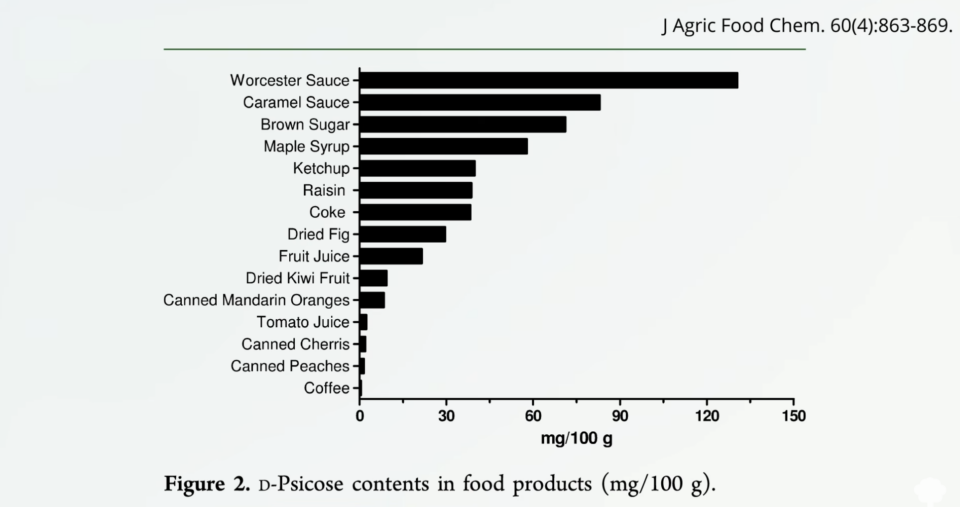
See, allulose is generated when fructose is heated. That’s why one unfortunate affected person saved breaking out in hives when consuming meals like spaghetti, hamburgers, or desserts—he occurred to be allergic to allulose, and allulose is created by the way within the course of by which excessive fructose corn syrup is made. So, basing the security of allulose on the truth that it’s already been current in our meals provide isn’t very convincing. You don’t know if it’s protected till you place it to the check.
In contrast to desk sugar, allulose is protected for the tooth—it isn’t apparently metabolized by cavity-causing micro organism to make acid and construct up plaque. It doesn’t increase blood sugars, even in folks with diabetes. It may be labeled as having zero energy, although technically it might have about one and a half energy per teaspoon, just like erythritol. Additionally like erythritol, it is just about 70% as candy as desk sugar however has virtually the identical style, texture, and efficiency as common sugar. Are there any toxicities?
Allulose is taken into account a “comparatively unhazardous” sugar. What does that imply? Nicely, we all know a sweetener known as xylitol could be extraordinarily harmful to canine. As little as a half teaspoon in a 30-pound canine could be life-threatening, whereas an analogous dose of allulose apparently wouldn’t be an issue, although greater than half a cup at a time might make them sick. This was a single-dose examine, although. The long-term security of allulose was examined over a interval of some months and didn’t appear to trigger any dangerous results at a dose of about one and a half teaspoons a day for wholesome 30-pound canine. In actual fact, their ldl cholesterol really went down, main the investigators to recommend scientific research to see if it’s one thing veterinarians ought to begin prescribing for obese pooches.
What occurs when folks devour allulose? When the dose was progressively elevated to establish the utmost single dose that may very well be consumed sometimes, no extreme gastrointestinal signs have been famous till a dose of 0.4 g/kg of body weight was reached, which can be about 7 teaspoons, with extreme signs of diarrhea occurring at round 9 teaspoons. One may marvel who might eat that a lot sugar at a time, anyway? A single can of Coke has 10 teaspoons, and a bottle of Mountain Dew has almost twice that, as you possibly can see beneath and at 5:19 in my video.
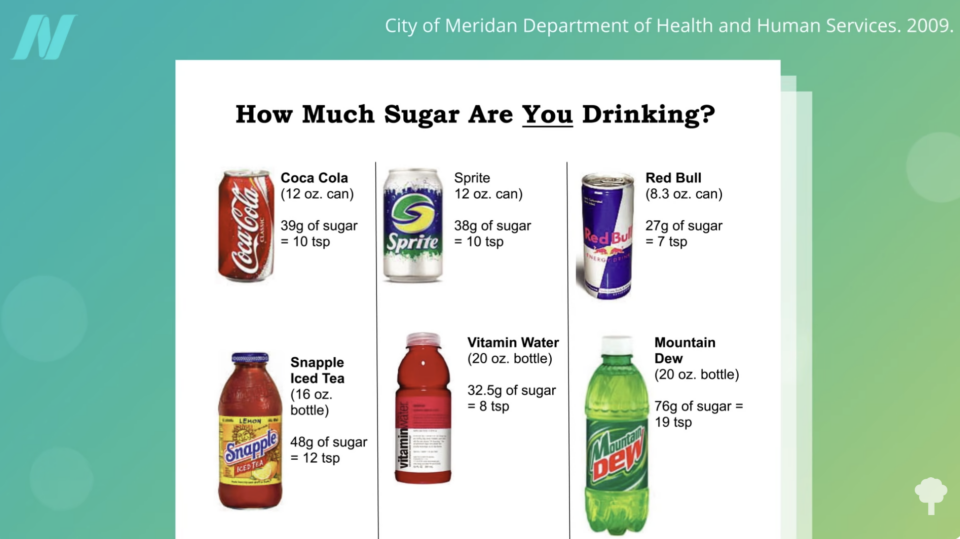
So, allulose is clearly not appropriate as a standalone sweetener for sugary drinks.
When it comes to a day by day higher restrict given in smaller doses all through the day, as soon as consumption reaches round 17 teaspoons a day, relying on physique weight, folks begin getting extreme nausea, diarrhea, belly ache, and complications. So, folks ought to in all probability keep beneath single doses of about 7 teaspoons and never exceed about 15 teaspoons for the entire day. The common American could also be getting 17 teaspoons of added sugars a day, so it’s definitely not one thing the meals trade can fully change over to.
On this manner, allulose is near xylitol by way of most single dose, whereas an average-weight man in america might get away with 14 teaspoons of erythritol at a time, and an average-weight lady, 15 teaspoons. That’s nonetheless not sufficient to sweeten a bottle of Coke, however it gives somewhat extra leeway for sweetening tea or sprinkling on a grapefruit.
Allulose is claimed to offer well being advantages, although, in comparison with erythritol. Fourth-generation sweeteners like allulose are stated to have a bonus: “extra features,” which you’ll see beneath and at 6:28 in my video.
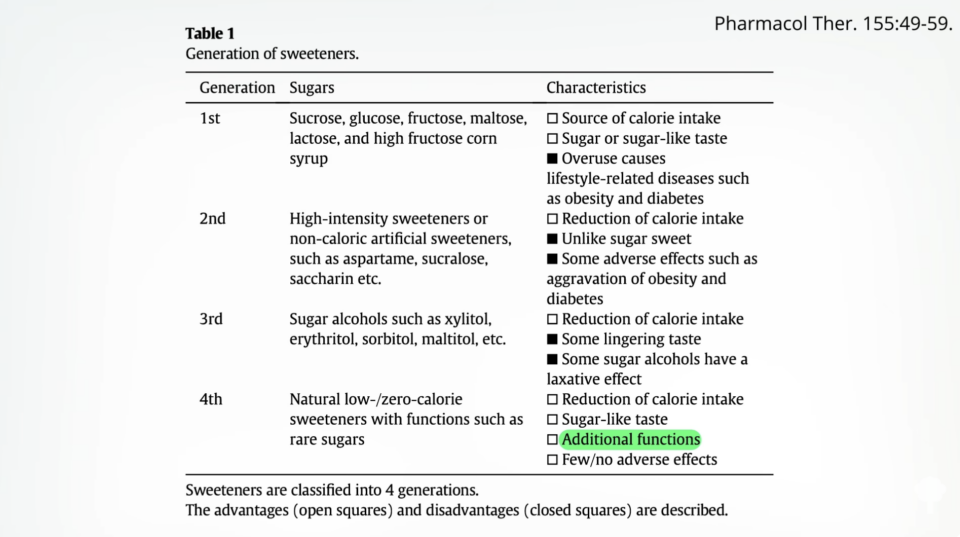
We’ll discover out if that’s true within the subsequent weblog.
Physician’s Be aware
Are Uncommon Sugars Like Allulose Really Wholesome? That’s the following weblog.
I’ve coated a spread of different sweeteners earlier than in these movies: