



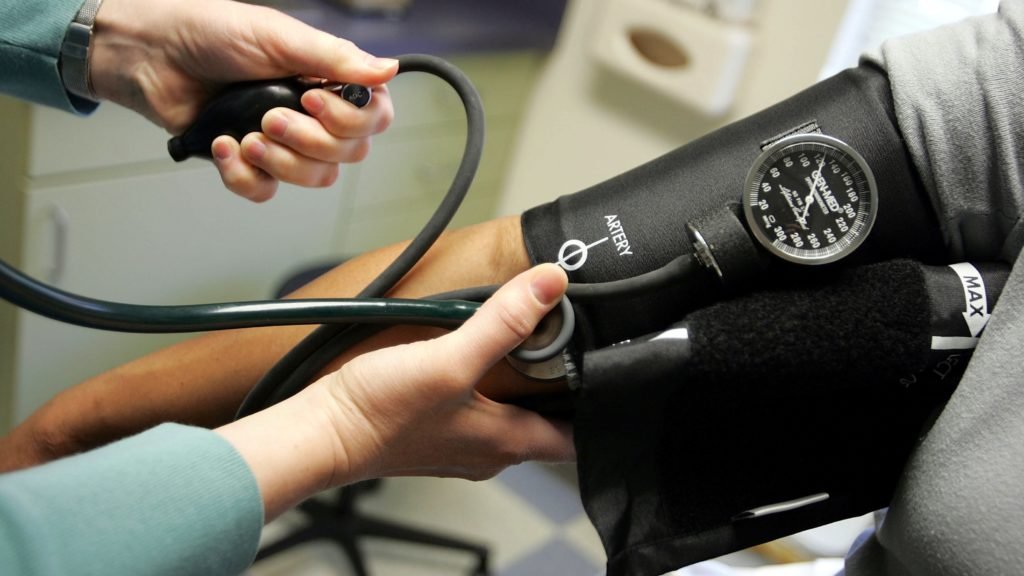
CHICAGO — Hypertension has earned its repute because the silent killer. If somebody has diabetes or has had a stroke, the danger of great cardiovascular occasions posed by hypertension climbs even larger.
Three research introduced Saturday on the American Coronary heart Affiliation’s scientific periods reported on latest makes an attempt to decrease blood strain in folks with these difficult medical histories, and the way medical care ought to attain throughout specialties to deal with them. One small however numerous trial examined a standard diuretic after a stroke, one other checked out intensifying therapy to succeed in lower-than-standard post-stroke blood strain objectives, and the third checked out going decrease in folks residing with kind 2 diabetes.
Every of the scientists main the research and the consultants commenting on them at a media briefing emphasised the position of blood strain. Including a broadly obtainable drug earlier held promise for controlling blood strain, however it was a cut up choice between the results of decrease numbers post-stroke and with diabetes.

STAT Plus: Failure of Novartis Lp(a) drug raises questions on cardiovascular technique
“Blood strain is outlined in tips as crucial modifiable danger issue for recurrent stroke,” Jordana Cohen of the Perelman Faculty of Drugs on the College of Pennsylvania, stated. “We all know that blood strain management after stroke is suboptimal.”
Her trial, referred to as REDUCE, took benefit of the widespread, low-cost diuretic spironolactone — generally referred to as a water tablet. It’s normally given to folks late in therapy, after three different drugs haven’t labored. However when spironolactone was given to folks proper after a stroke, they have been extra doubtless than these receiving standard post-stroke care to see their blood strain drop three months later to lower than 130/80 mm Hg.
Small modifications are necessary, Cohen stated concerning the trial, whose mission was to measure blood strain discount, not cardiovascular outcomes.. When blood strain goes down by as little as 7 mm, that discount has been related to a 38% decrease danger of recurrent stroke.
The trial was introduced as an summary and has not but been revealed in a medical journal. In his feedback, Bruce Ovbiagele of the united states Weill Institute for Neurosciences, stated it’s well-known that one-third of stroke sufferers don’t meet blood strain tips, and stated the research gives hope for a greater method.
“We additionally know that one 12 months after a stroke has occurred, about one out of 5 stroke survivors have discontinued their antihypertensive drugs,” he stated. “This glorious notion to attempt to use spironolactone is a superb one as a result of it’s a medicine that’s low-cost. It’s obtainable and recognizable to so many clinicians.”
A a lot bigger blood strain trial in Brazil examined whether or not aiming for a high variety of 120 mm or decrease can be higher than the at the moment beneficial 140 mm.

Workforce method to reducing hypertension labored even in ‘a tricky panorama’
“Nearly all sufferers enter stroke-based antihypertensive remedy. However what we don’t know is how low ought to we go,” Gisele Sampaio of the Federal College of Sao Paulo in Brazil stated about her OPTIMAL-STROKE research, revealed within the New England Journal of Drugs.
Individuals who took drugs to succeed in this decrease systolic blood strain aim have been considerably much less prone to die or have cardiovascular occasions inside 4 years, in comparison with those that acquired customary therapy to decrease ranges under 140 mm Hg, the research discovered. The nonfatal occasions within the OPTIMAL-STROKE research included coronary heart assault, stroke, and hospitalization for chest ache or coronary heart failure.
Attaining these decrease numbers would require medical supervision, together with monitoring kidney perform. There was no improve within the danger of end-stage renal illness, within the want for dialysis, or in deaths however some markers of renal perform have been off, Otavio Berwanger of Imperial School London and chair of the OPTIMAL research steering committee, stated concerning the research. However there have been modifications in electrolyte ranges according to utilizing a diuretic or how a lot water folks drink
The associated OPTIMAL-DIABETES trial, additionally revealed within the New England Journal of Drugs, got here to a unique conclusion.
Karla Santo of Einstein Hospital Israelita in Sao Paulo reminded her viewers that the perfect blood strain goal in sufferers with kind 2 diabetes continues to be unsure. Her research sought to guage the decrease goal of lower than 120 in these sufferers.
Its findings have been impartial: Amongst sufferers with kind 2 diabetes, aiming at a systolic blood strain of lower than 120 mm Hg, slightly than lower than 140 mm Hg, didn’t scale back the prevalence of main cardiovascular occasions or deaths.
Shawna Nesbitt of UT Southwestern Medical Middle identified variations between women and men and between youthful and older sufferers in these two older trials and the newer OPTIMAL-DIABETES trial. She additionally questioned about longer follow-up.
“I believe it very strongly means that this trial helps slightly than rebukes what we have already got seen in different trials treating hypertension extra aggressively in sufferers with diabetes,” she stated. “We’d start to consider blood strain therapy in a extra nuanced method. That’s to say, maybe we’ve been lumping sufferers collectively in a method that will not essentially all the time be advantageous.”
One widespread problem which will come up is methods to apply these ends in the U.S.
“Put up-stroke care may be very fragmented. Neurologists care for sufferers in hospital. Then sufferers go into major care,” Ovbiagele stated. “So how does a nephrologist and neurologist and a major care individual handle the utilization of the drugs?”
Cheryl Bushnell of Wake Forest College stated docs know what to do.
“It’s not the what, however it’s the how,” she stated in her feedback. “Managing blood strain in stroke sufferers is extremely troublesome, I say as anyone who has to personal that as a clinician. Is it the neurologist? Is it the nephrologist? Is it the first care physician?”