



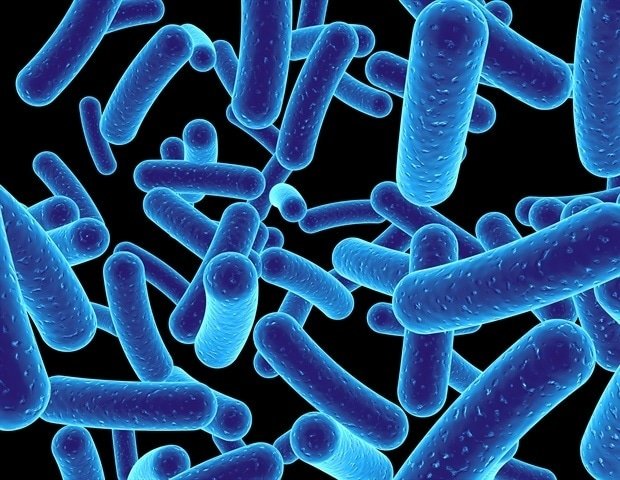
Thriving alongside trillions of micro organism within the human digestive tract is an unlimited inhabitants of viruses. Ever since one such denizen of the intestine microbiome, referred to as picobirnavirus, was first noticed many years in the past, researchers thought it instantly contaminated human tissue and performed a job in gastrointestinal sickness. However researchers at Washington College Faculty of Drugs in St. Louis and collaborators have simply rewritten that story: This widespread virus infects intestine micro organism, not human cells.
The findings, revealed Oct. 29 in Nature Microbiology, are a serious milestone for the sector of virology and redefine picobirnaviruses as solely the third identified household of bacteria-infecting RNA viruses ever found.
This discovery modifications our understanding of the intestine ecosystem. RNA viruses that infect micro organism within the human physique have been considered uncommon. However picobirnaviruses are considerable within the intestine and understanding that they infect micro organism is a primary step in enabling us to raised perceive what position they play in inflicting illness.”
David Wang, PhD, the Robert C. Packman Professor, WashU Drugs
Abdomen bug or micro organism hunter?
For practically 4 many years, scientists thought that they had recognized one other human abdomen bug.
Picobirnaviruses have been first described in stool samples from sufferers affected by diarrhea, turning up alongside infamous culprits similar to rotavirus and norovirus. With out the instruments to develop the virus within the laboratory, the researchers assumed the newcomer was instantly attacking human cells to trigger gastrointestinal distress.
That’s, till advances in sequencing know-how led the Wang lab to unexpectedly discover traces of picobirnavirus genetic materials whereas learning Caenorhabditis elegans, a microscopic roundworm typically utilized in genetics analysis. Though people and worms differ in some ways, one commonality is micro organism: Worms eat them, and people carry trillions of them of their intestine.
The researchers requested: Do picobirnaviruses infect micro organism?
First creator Tianyu Gan, PhD, a postdoctoral analysis fellow in Wang’s lab, in collaboration with researchers at Cambridge College Hospitals NHS Basis Belief, Flinders College and San Diego State College, got down to discover the virus inside a bacterial host. He launched human stool samples to microbe-free mice, establishing the primary laboratory mannequin the place the virus might actively multiply. Subsequent, Gan and group harvested the viral inhabitants from the mouse intestine and grew it in lab dishes stuffed with intestine micro organism below oxygen-free circumstances. As a result of mammalian cells can’t survive with out oxygen, the virus’ development over 20 days prompt it was multiplying inside micro organism. Antibiotics that killed off the micro organism additionally halted the virus from multiplying.
Utilizing superior molecular imaging and mobile sorting, the researchers discovered picobirnaviruses inside a newly recognized intestine micro organism they named Candidatus Anaerotignum faecalis.
The presence of picobirnaviruses within the intestine has been linked to medical circumstances together with acute diarrhea, graft-versus-host illness (a complication of stem cell transplants) and Kind 1 diabetes.
It is attainable that, though picobirnavirus would not infect human cells instantly, it might be destroying useful intestine micro organism. Wiping out pleasant microbes disrupts the intestine ecosystem, permitting dangerous pathogens to bloom and prompting micro organism to launch toxins. Furthermore, human intestine cells can take up viral particles and spark irritation, with out the virus multiplying inside human tissue.
Alternatively, detecting excessive ranges of picobirnavirus in sufferers with these circumstances doesn’t show the virus causes illness, Wang warned. Even when it not a pathogen, it might function a biomarker, signaling intestine misery.
“Step one to understanding how a virus impacts human well being is knowing what it infects,” Wang stated. “Figuring out that picobirnaviruses infect micro organism shifts our focus to the microbiome. It opens new alternatives to review how these viruses form bacterial communities within the intestine and the way we’d harness them for focused therapies.”
Supply:
Journal reference:
Gan, T., et al. (2026). A human gut-associated picobirnavirus establishes the Picobirnaviridae because the third clade of RNA bacteriophages. Nature Microbiology. DOI: 10.1038/s41564-026-02523-z. https://www.nature.com/articles/s41564-026-02523-z